
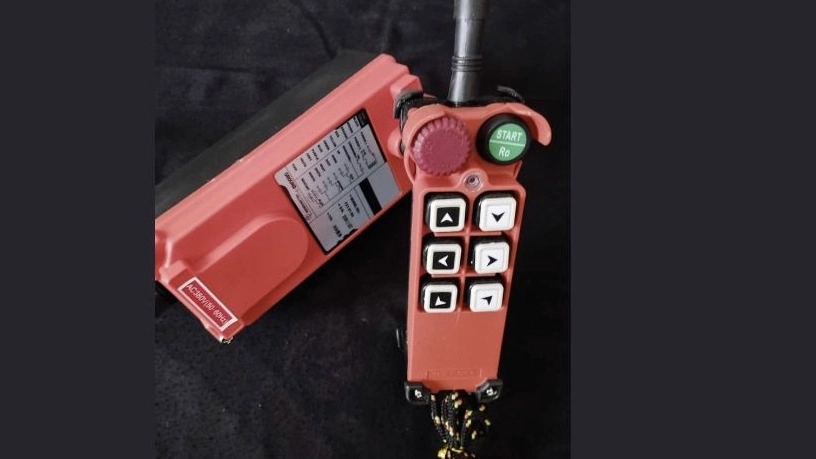
Before introducing the wireless control of the crane, we must make a comparison between the remote and wired models. Hanging or wired controllers, while being easy to set up, operate, and maintain, can be very dangerous, for example, due to the proximity of the operator to the hook. There is a possibility of many accidents such as falling cargo, colliding with equipment, breaking the SIM box, damaging the communication cable, electrocution or other accidents. Of course, in some systems, low voltage or one-to-one transformers are used to reduce the risk of electric shock in wired controllers.
Remote Control of Ceiling Crane
The best option in the wireless control of cranes is to use industrial remote controls that are resistant to disturbances, noise waves, environmental factors, etc. Before choosing wireless equipment, pay attention to the fact that the use of non-industrial controllers in cranes can lead to many accidents. It has been described in previous articles that each system sends commands wirelessly from separate parts such as the transmitter and receiver of the signal amplification equipment. Antenna etc. is formed.
The distance signal sending and receiving system and the amount of information transmitted in wireless crane control are different from wireless controls. In Shasti, a limited number of commands are sent through the transmitter and no commands are received. On the other hand, the distance between the transmitter and the receiver in this equipment is limited and they should never be used in motion control systems. In the case of wireless crane remote controls, it is much more advanced and reliable. Remotes are made in different models with various commands and control items, and they can be transmitters or receivers.
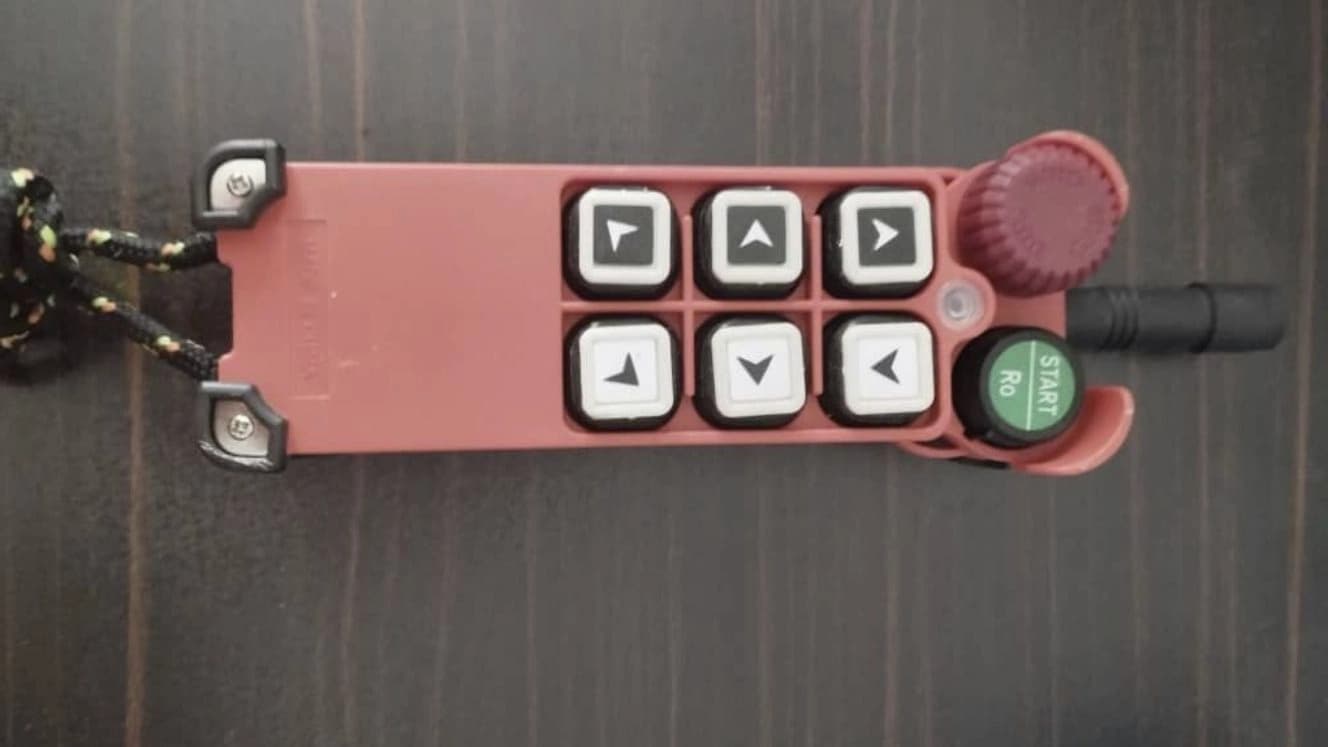
Ceiling Crane Wireless Control
Remote control or remote control is a device that allows the operator to control the operation of a device or machine from a distance. In the case of overhead cranes, the remote control is a tool that allows the operator to direct the movements of the crane without the need to be physically present in the control cabin. Ceiling crane remote controls are divided into two main categories:
Wired remote controls: These types of remote controls are connected to the crane through a cable and send control signals through this cable. Wired remote controls are usually used in industrial environments with special conditions and space limitations.
Wireless Remote Controls: These types of remote controls communicate with the crane via radio or infrared waves and allow the operator to move around the crane more freely. Wireless remote controls are more popular due to ease of use and greater flexibility.
The benefits of using remote control over traditional methods
Using remote control in overhead cranes has many advantages over traditional control methods, including the following:
Increased safety: One of the most important advantages of remote control is increased safety in cargo handling operations. By using remote control, the operator can be located in a safe place and away from dangerous areas and control the operation. This minimizes the risk of the operator being injured by hitting heavy objects or getting electrocuted.
Increased accuracy: Remote controls usually have precise and sensitive control buttons that allow the operator to control the movements of the crane with high precision. This reduces the possibility of damage to cargo or equipment.
Productivity increase: Using the remote control, the operator can move the load more quickly and accurately. Also, the remote control allows the operator to easily switch between different operations and reduce wasted time.
Reduce operator fatigue: Manual control of cranes can cause rapid operator fatigue, especially in long-term operations. By reducing the physical force required to control the crane, remote control reduces operator fatigue and increases productivity.
More flexibility: The remote control allows the operator to monitor the load handling operation from different angles and choose the best viewing angle to perform the operation.
Extensive applications of roof crane remote control in various industries
Manufacturing and automotive industries
In manufacturing and automotive industries, remote control of overhead crane plays a very important role. These devices are used to move heavy and bulky parts in production lines, transfer parts between workstations, and also load and unload raw materials and finished products. By using the remote control, the operator can place the parts in precise places with high accuracy and speed and prevent them from being damaged. Also, the remote control allows the operator to stay away from dangerous places and increase work safety.
Warehousing and logistics
In warehouses and logistics centers, remote control overhead cranes are used to move pallets, boxes and other loads at different heights. Using the remote control, you can quickly and accurately place loads on the racks or remove them from them. Also, the remote control allows the operator to easily maneuver in narrow spaces and avoid collisions with other equipment and people.
Marine and oil and gas industry
In the marine and oil and gas industries, remote control overhead cranes are used to load and unload heavy equipment on ships, oil and gas platforms. Also, these devices are used to install and repair underwater equipment. Remote control allows the operator to perform operations safely and accurately in harsh and dangerous environments such as ship decks and oil platforms.
Building and installing heavy equipment
In the construction industry, the remote control overhead crane is used to install beams, precast concrete, large glass and other heavy equipment. By using remote control, this equipment can be placed in the desired location with high accuracy and speed and prevent accidents. Also, the remote control allows the operator to work at heights and stay away from rough terrain.